
Turning Signup Into Activation
LIFECYCLE MARKETING / CUSTOMER ACTIVATION CASE STUDY
problem statement
Monorail, a Hitachi partner, is a regulated fintech app that needed to help new users move from signup to an active Patriot Portfolio without relying on hype, pressure, or risky gamification. I helped shape the lifecycle messaging, onboarding experience, product education, and compliance-safe motivation that guided users toward activation.
Portfolio conversion increased from 9.4% to 16.3%, a 73% lift. New Patriot Portfolios increased 74%.
Objectives
- Understand where users were losing momentum after signup
- Identify trust and comprehension gaps in the onboarding experience
- Explore motivation patterns that could work inside a regulated financial product
- Translate findings into clear lifecycle messaging and onboarding direction for marketing, product, design, and compliance.
Goals
- Increase post-signup conversion into Patriot Portfolios
- Make the user’s next step easier to understand
- Create a progress model that felt helpful, not manipulative
- Align motivation mechanics with long-term, values-based investing
- Improve activation while protecting trust and regulatory clarity
my process
From Insight to Impact

Map the Activation Journey
I reviewed the steps users had to take after signup and identified where the experience created hesitation, uncertainty, or drop-off.

Study Motivation Patterns
I analyzed onboarding and gamification patterns across fintech products to understand what encouraged progress, what created risk, and what needed to be avoided.

Synthesize Signals
I combined support feedback, product goals, behavioral data, stakeholder input, and AI-assisted synthesis to identify the strongest opportunities.
Qualitative Research & Ideation
We analyzed onboarding patterns, support feedback, competitor experiences, whiteboard sessions, stakeholder input, and AI-assisted ideation to understand how users moved from signup to activation.
Key Observations
- Users needed a clearer sense of what they had completed and what still needed to happen.
- Financial actions created hesitation when the purpose of the next step was not obvious.
- Progress indicators helped reduce uncertainty, but only when paired with plain language.
- Many fintech gamification patterns created trust and compliance risks if copied directly.
- AI-assisted ideation helped explore reward models quickly, but final decisions required human judgment, product context, and compliance review.
Inferences
- The experience needed to make progress visible earlier in the journey.
- Motivation had to be tied to responsible account progress, not urgency or hype.
- The product needed to explain the next step without overwhelming the user.
- Compliance-safe language had to be built into the experience from the start.
- A clear activation framework could help users move forward while giving the team a scalable model for future onboarding work.
user needs
Defining Real User Needs

Meaningful Progress
Users needed to see where they stood and what action would move them forward.

Responsible Motivation
Users needed encouragement that supported long-term investing behavior without creating pressure or risk.

Transparent Rewards
Users needed to understand how levels, benefits, and milestones were earned.

Trust by Design
Users needed the experience to feel credible, calm, and aligned with financial responsibility.
Recommendations Turned Into Product Decisions
To support the research findings, the team shaped the onboarding experience around progress, transparency, and compliance-safe motivation.
Tiered Membership Levels
Clear levels with defined criteria gave users visible progress tied to responsible investing actions—not trading frequency or performance
Progress Bars & Indicators
Persistent progress indicators showed users where they stand and what’s required next, reinforcing long-term commitment over short-term wins
Transparent Requirements
Each level surfaced explicit requirements and milestones, removing ambiguity around how progress and rewards are earned
Service-Based Rewards
Higher tiers unlocked access-based benefits (e.g. advisor access) rather than financial incentives, preserving trust and compliance
Gamification in Onboarding
New users were introduced to progress and purpose from day one, setting expectations early and aligning motivation with stewardship
Compliance-Reviewed
All labels, rewards, and interactions were vetted with compliance to ensure clarity, avoid implied guarantees, and protect user trust
High Fidelity Screens
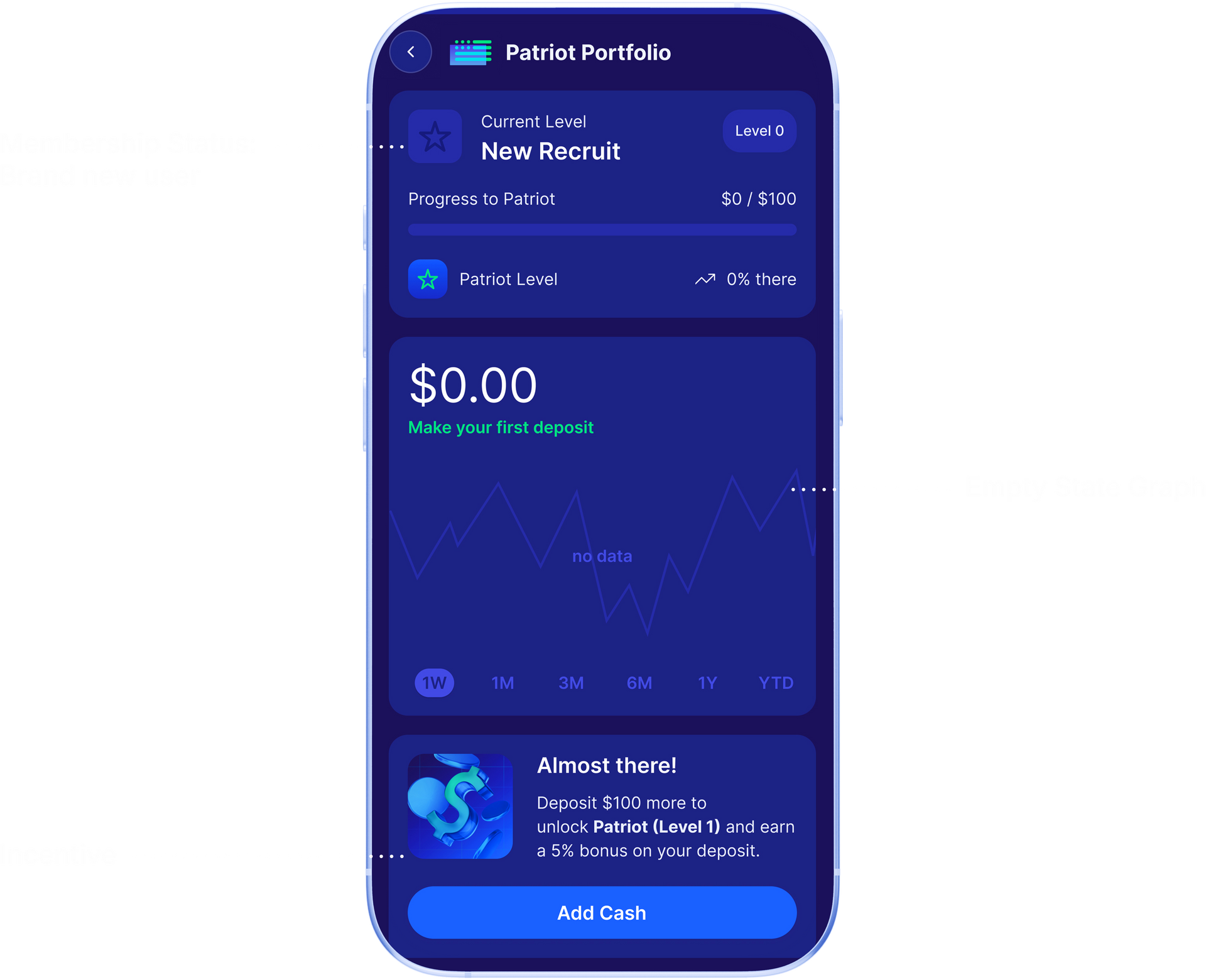
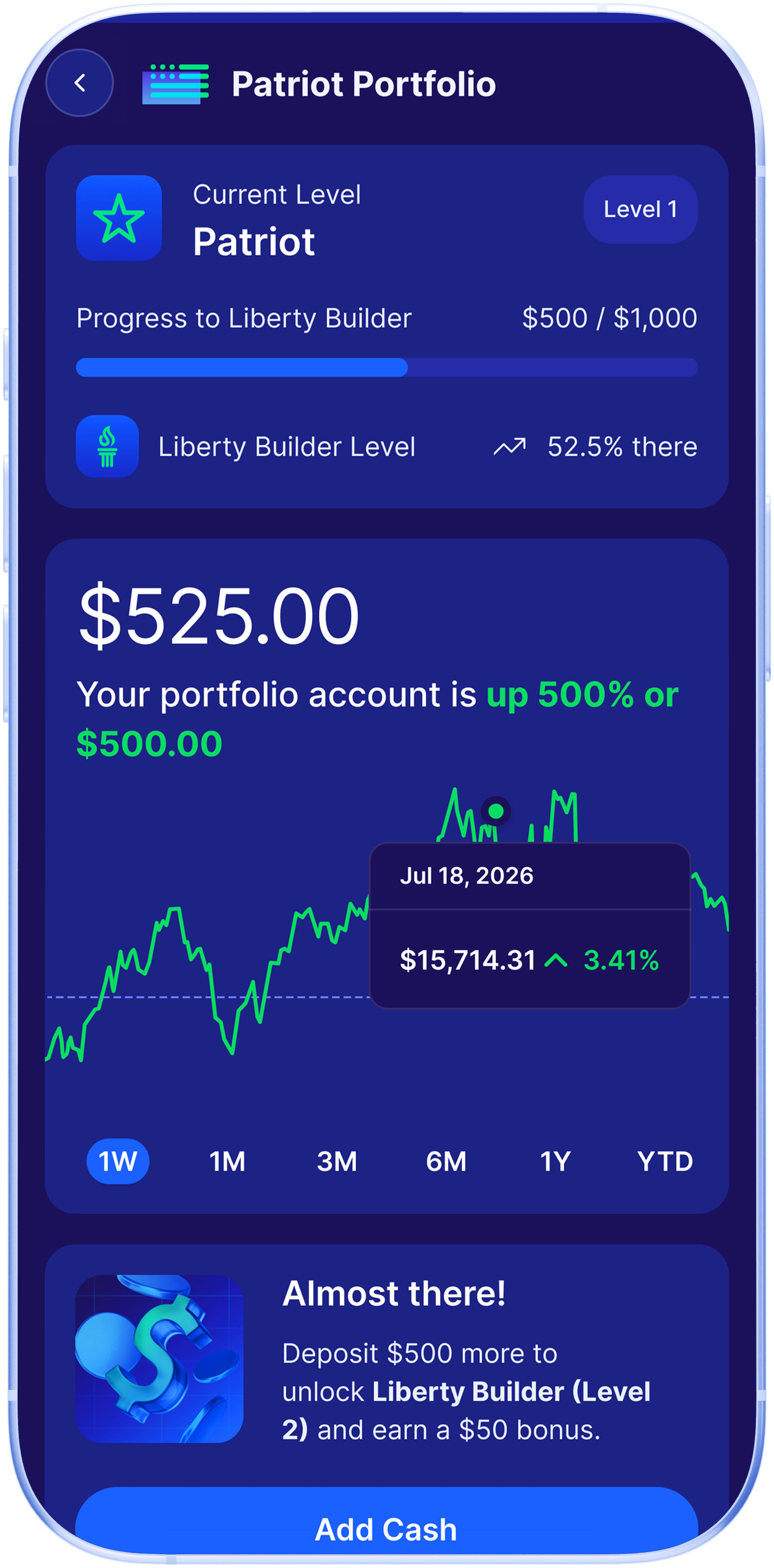
The user has deposited $100 – $999 in their Patriot Portfolio, and is incentivized to advance to the next level
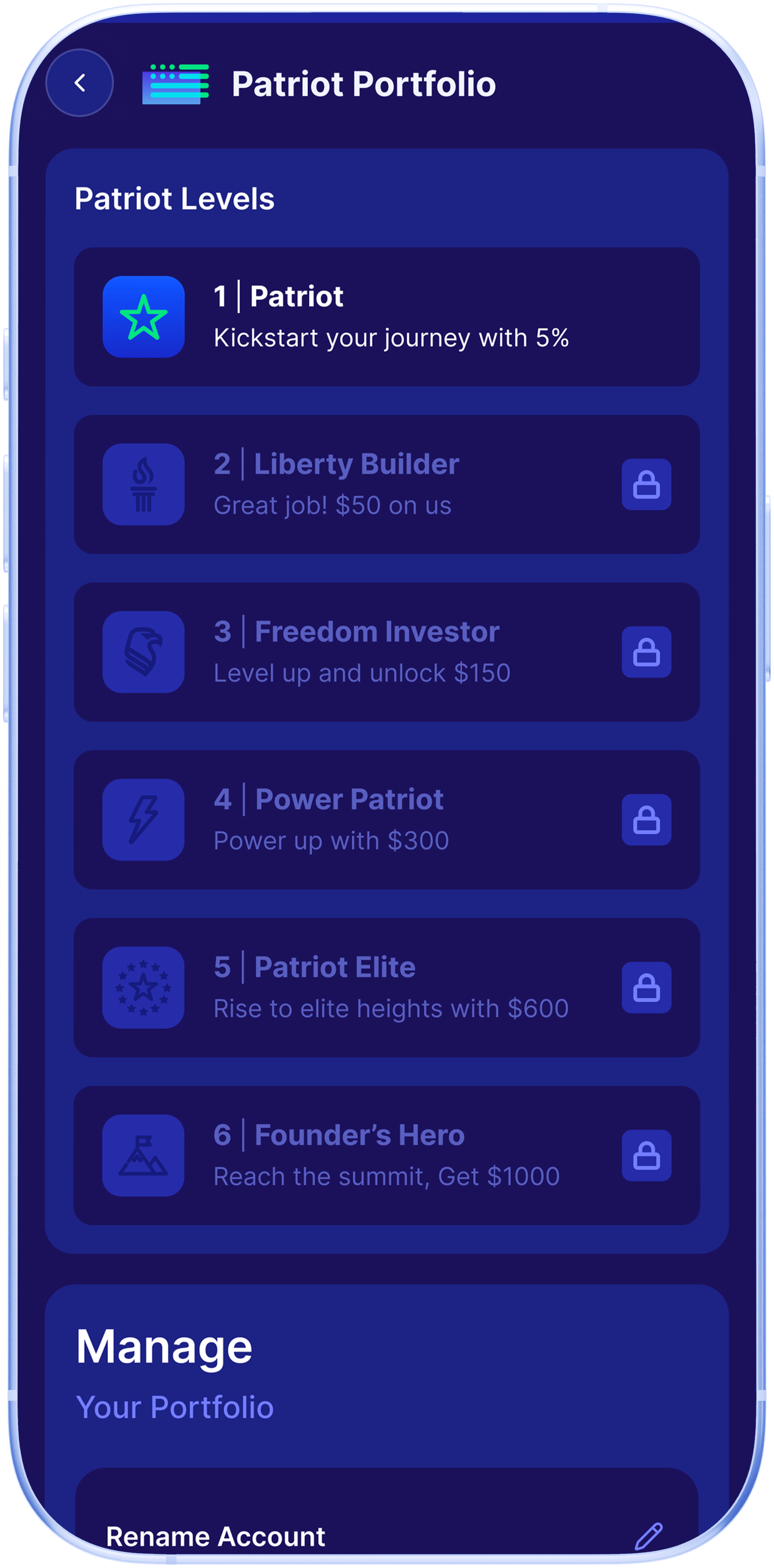
When the user scrolls down, they can see that they have unlocked the first membership level
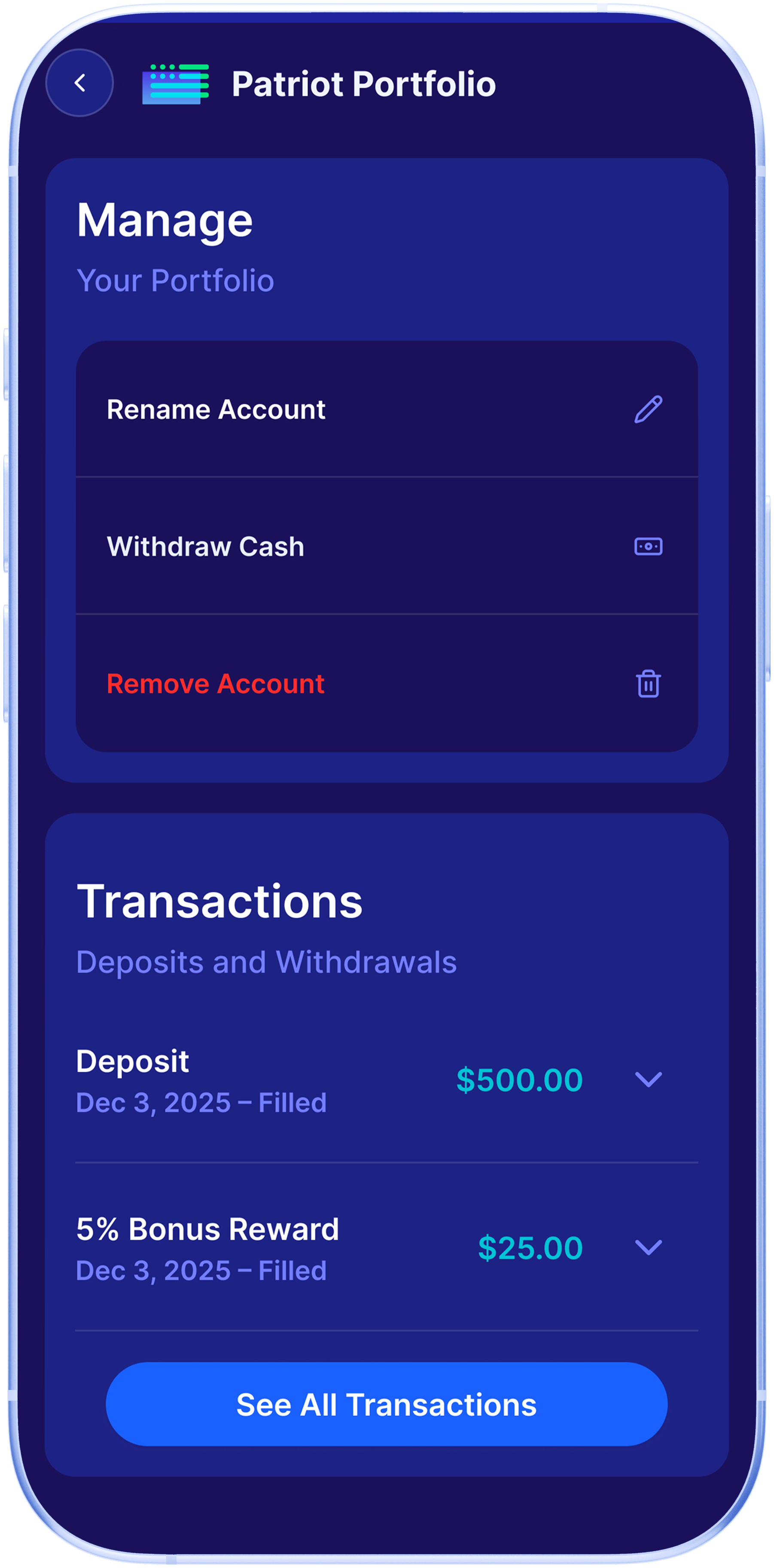
Scrolling further, the user sees a full Transaction history, including their 5% bonus reward
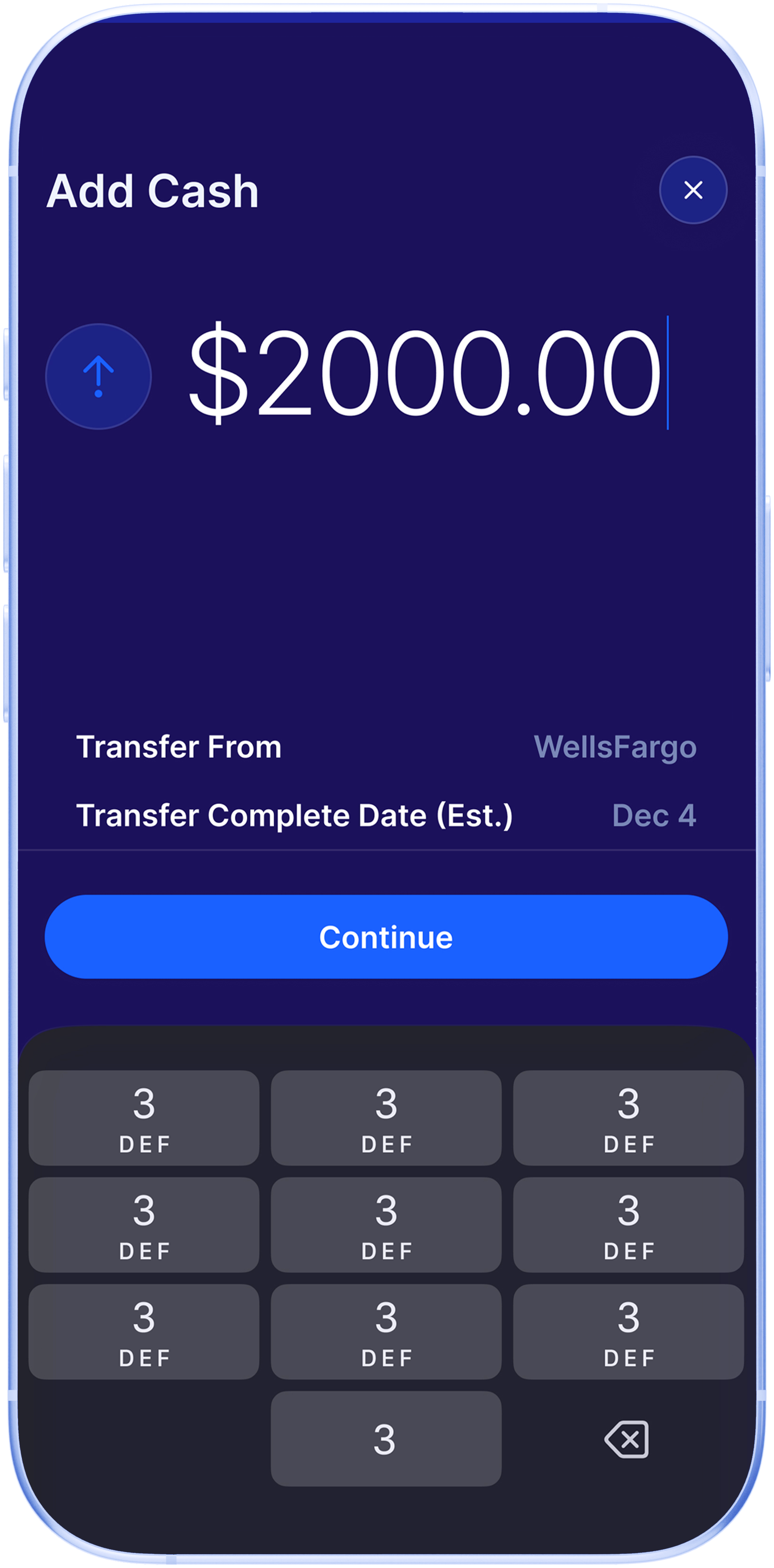
The user deposits another $2000, qualifying them for the next level
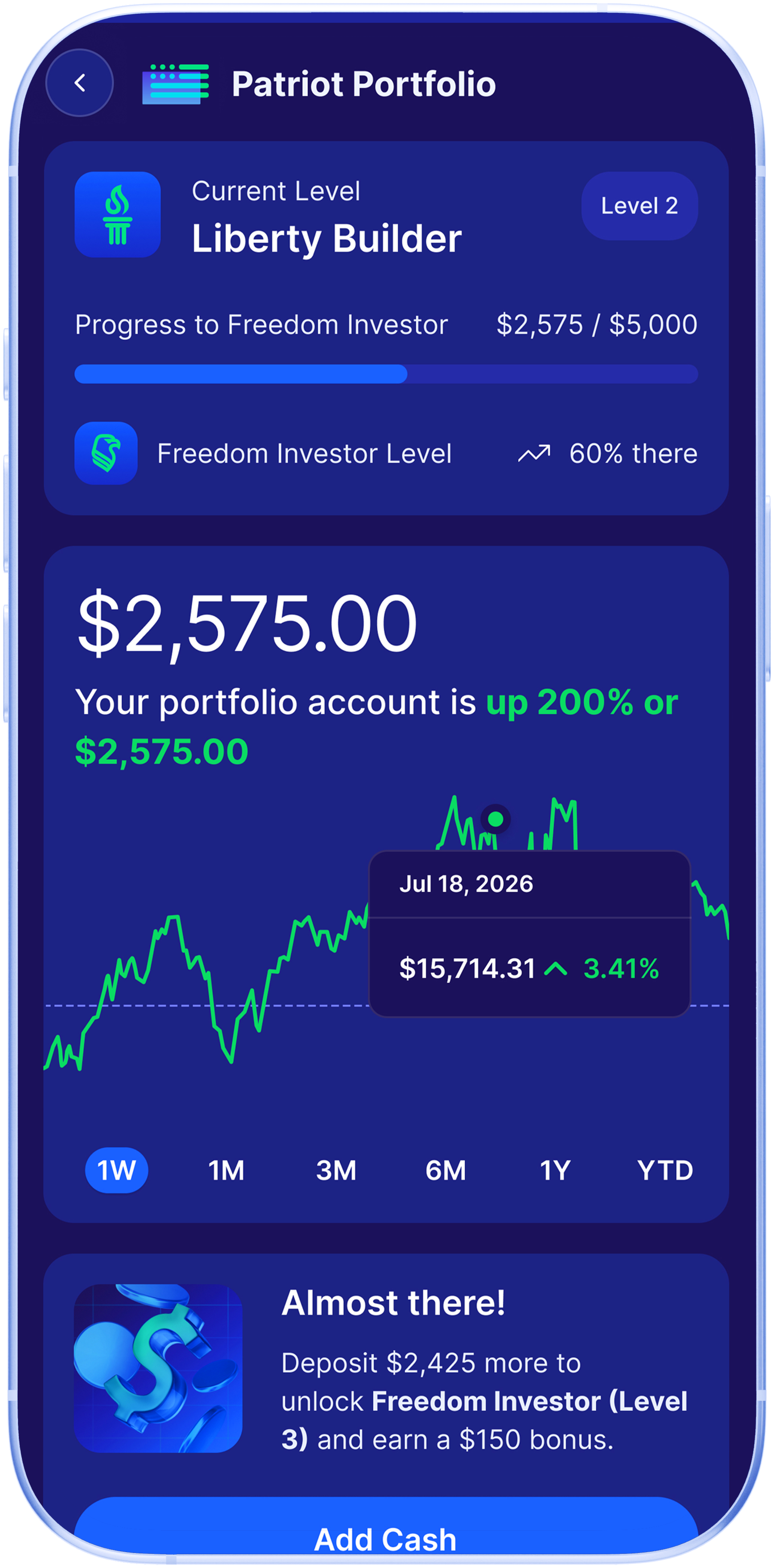
The user sees Their current membership level has gone up to Liberty Builder. The progress bar illustrates how far to the next
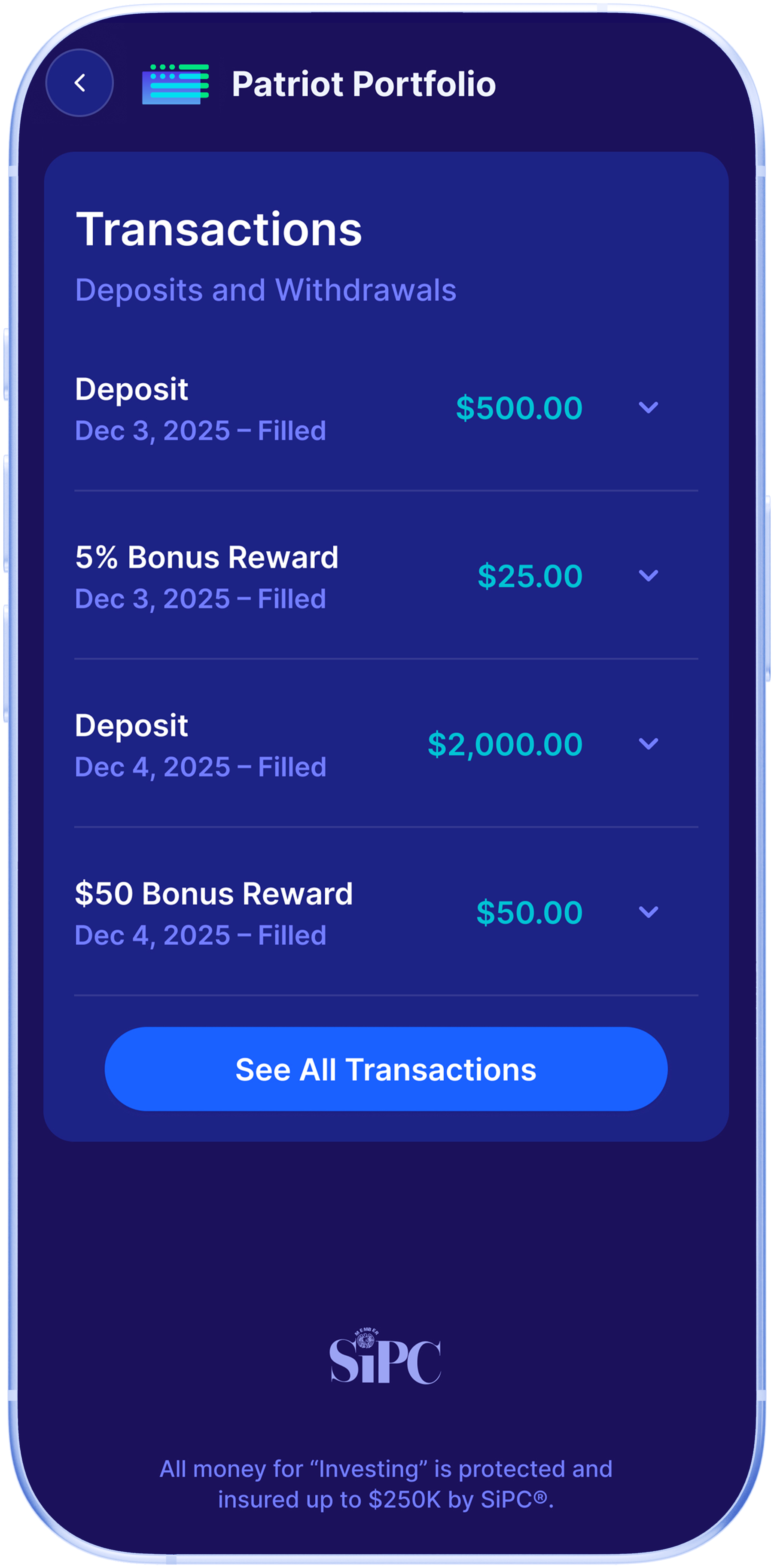
The user sees a full Transaction history, including their 5% bonus reward and their $50 reward
outcome
The work helped turn a vague activation problem into a clearer product strategy.
By researching where users were getting stuck and reframing motivation around transparent progress, the team created an onboarding experience that felt easier to understand, more trustworthy, and easier to act on.
Post-signup conversion increased from 9.4% to 16.3%, a 73% lift, while new Patriot Portfolios increased by 74% during the campaign window.
Most importantly, the experience helped users move forward without sacrificing trust.
Let’s Talk
I’m currently open to Marketing Manager opportunities. If you think I could help your team, fill in the form or call to set up a meeting at (315) 530-5269 or email me at gregorylifanov@gmail.com